
Commercial Roof Damage
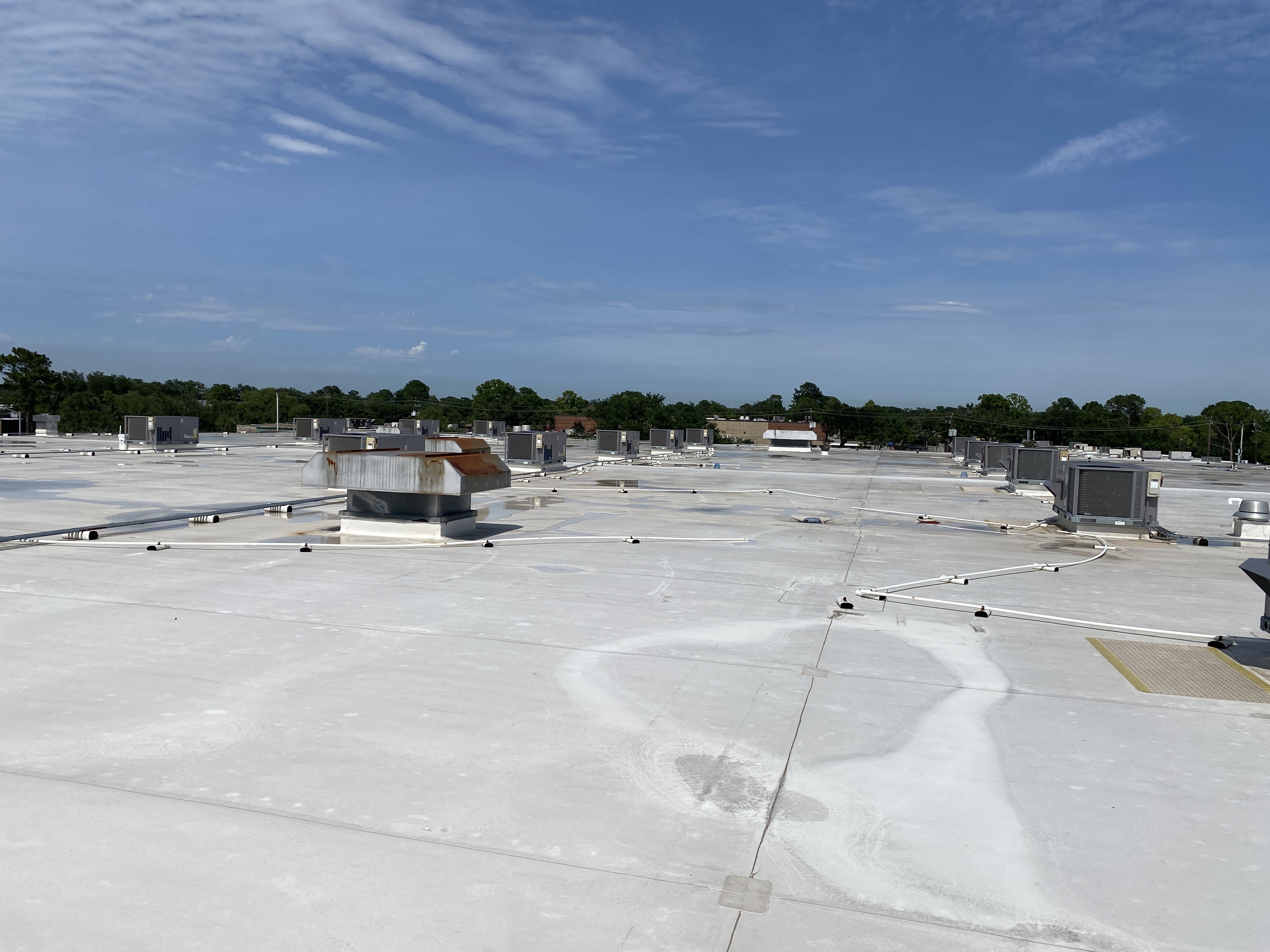
Hail, wind, water intrusion, membrane damage, metal-roof damage, flashing failures, and rooftop equipment may affect both the roof system and the occupied space below.
DENIED • DELAYED • UNDERPAID COMMERCIAL PROPERTY CLAIMS
Commercial property losses can affect far more than the damaged building. Repair costs, business personal property, tenant improvements, equipment, inventory, code requirements, operations, and loss documentation may all become part of the claim.
Commercial policies and claim files are often more complex than residential claims. The outcome may depend on policy provisions, building systems, repair scope, valuation, technical reports, and how the loss affects the property or business.
We’ll review the available claim information, answer your questions, explain what we see, and help you understand your options before making important decisions.
COMMON COMMERCIAL PROPERTY CLAIMS
A commercial loss may affect the building, business property, tenants, operations, and other financial interests at the same time. Understanding the complete scope of the loss is often the first step in evaluating the claim.
Hail, wind, water intrusion, membrane damage, metal-roof damage, flashing failures, and rooftop equipment may affect both the roof system and the occupied space below.
Burst pipes, plumbing failures, sprinkler discharge, roof leaks, equipment leaks, and water migration may damage finishes, inventory, equipment, tenant spaces, and building systems.
A commercial fire may involve structural repairs, smoke contamination, water damage, equipment, inventory, tenant improvements, debris removal, and interruption of normal operations.
Damage may involve walls, ceilings, flooring, electrical systems, plumbing, HVAC, specialty finishes, built-ins, and improvements made by either the owner or tenant.
Furniture, inventory, machinery, tools, electronics, records, supplies, and other business property may require documentation, testing, repair, restoration, valuation, or replacement.
Apartment complexes, retail centers, industrial facilities, churches, campuses, and other larger properties may require coordinated inspections, building-by-building documentation, and specialized claim support.
NOT SURE WHAT THE COMMERCIAL CLAIM INCLUDES?
A commercial claim may involve several categories of property, coverage, documentation, and financial impact. The visible building damage may be only one part of the loss.
We’ll review the available estimate, photographs, reports, policy information, and supporting claim documents and explain what we see.
A member of our team will review the information you submitted and contact you if anything else is needed.
Prefer to talk now? Call (346) 845-0880.
COMMON COMMERCIAL CLAIM ISSUES
Commercial claims often involve reasonable questions about the repair scope, valuation, policy provisions, building systems, code requirements, responsibility for tenant improvements, and the financial effects of the loss.
The estimate may omit access work, demolition, temporary protection, specialty trades, building systems, supervision, permits, engineering, or work needed to restore adjoining areas.
Questions may arise over ownership, valuation, depreciation, repairability, replacement cost, actual cash value, inventory, equipment, and tenant-owned versus landlord-owned property.
Engineers, consultants, contractors, hygienists, accountants, and other specialists may evaluate different parts of the loss. Their findings should be considered within the complete claim record.
Deductibles, limits, coinsurance, valuation provisions, code coverage, business-income terms, exclusions, endorsements, and reporting requirements may affect how the claim is evaluated.
QUESTIONS ABOUT THE COMMERCIAL CLAIM DECISION?
You do not have to interpret a complex commercial estimate, technical report, valuation, or policy position on your own.
We’ll review the information you have, answer your questions, explain what we see in plain English, and help you understand whether additional review appears worthwhile.
If we do not believe further review is likely to help, we’ll tell you.
A member of our team will review the information you submitted and contact you if anything else is needed.
Prefer to talk now? Call (346) 845-0880.
WHY COMMERCIAL CLAIMS ARE DIFFERENT
A commercial loss may affect several financial interests at once. The building owner, tenant, lender, property manager, contractor, and insurer may each rely on different records and have different responsibilities.
The claim may involve building repairs, business personal property, tenant improvements, equipment, inventory, temporary protection, code requirements, extra expense, and interruption of normal operations.
Not every commercial loss requires every specialist or every coverage category. The policy, property, business operations, damage, and available documentation should be evaluated together.
QUESTIONS ABOUT THE FULL SCOPE OF THE LOSS?
Commercial claim decisions may depend on building documentation, ownership records, technical findings, valuations, and the effect of the loss on normal operations.
We’ll review the information already available, explain how the pieces fit together, and identify questions that may deserve additional attention.
A member of our team will review the information you submitted and contact you if anything else is needed.
Prefer to talk now? Call (346) 845-0880.
OUR REVIEW PROCESS
Every commercial claim is different. A structured review helps organize the property damage, policy information, technical findings, financial records, and proposed repair scope into one understandable claim record.
Review the policy, estimates, payment or denial letters, photographs, reports, leases, inventories, contracts, valuations, and relevant claim communications.
Evaluate the reported building damage, affected systems, business property, tenant improvements, equipment, inventory, and available technical findings.
Compare the documented loss with the proposed repairs, valuations, policy provisions, limits, deductibles, and other claim decisions.
Explain what the available information shows, answer questions, identify remaining uncertainties, and help the property owner understand the available options.
READY TO APPLY THAT PROCESS TO YOUR CLAIM?
We’ll review the information you have available, explain our findings in plain English, and help you understand whether the proposed scope, valuation, and claim decision appear complete.
If we do not believe additional review is worthwhile, we’ll tell you.
A member of our team will review the information you submitted and contact you if anything else is needed.
Prefer to talk now? Call (346) 845-0880.
BUILDING THE CLAIM FILE
Commercial claim decisions are often based on the complete record of the loss—not one estimate, photograph, report, or invoice. An organized claim file helps establish what occurred, what was damaged, who owns the affected property, and how the loss was evaluated.
QUESTIONS ABOUT THE COMMERCIAL CLAIM FILE?
Commercial estimates, technical reports, policy provisions, leases, valuations, repair recommendations, and financial records should be considered together. Looking at one document rarely explains the complete loss.
We’ll review the information you already have, explain what it means, answer your questions, and provide an honest opinion about whether additional review may be helpful.
If further review is unlikely to benefit the claim, we’ll tell you.
A member of our team will review the information you submitted and contact you if anything else is needed.
Prefer to talk now? Call (346) 845-0880.
WHEN TO GET ANOTHER OPINION
Commercial property owners often request another opinion when the loss involves unresolved questions about repair scope, valuation, policy provisions, technical findings, ownership, or the financial effect of the damage.
If any of these situations apply, an independent review may help clarify the claim record and available options.
A member of our team will review the information you submitted and contact you if anything else is needed.
Prefer to talk now? Call (346) 845-0880.
WHY PROPERTY OWNERS CHOOSE US
Our founder previously evaluated property claims for an insurance company and understands how losses are investigated, documented, and reviewed.
We represent Texas property owners—not insurance companies—and help explain coverage, documentation, and available claim options.
We organize estimates, photographs, technical reports, policy documents, valuations, ownership records, and supporting information into a clear commercial claim presentation.
You do not pay a professional fee unless additional insurance benefits are recovered for your covered claim.
Our goal is to help you understand your options—not pressure you into a decision.
Whether you hire us or not, we want you to understand your claim.
Request My Free Claim ReviewNo obligation • No recovery, no fee
CLIENT REVIEWS
Property owners often tell us they value clear explanations, careful documentation, and straightforward answers throughout the claim process.
After the wind damage, we were unsure what the carrier's estimate actually covered. Fair Claims walked us through the documents and answered every question. Their attention to detail gave us confidence in the next steps.
COMMERCIAL CLAIM FAQ
Every commercial property claim—and every insurance policy—is different. These are some of the questions Texas property owners ask us most often.
Commercial property policies may cover damage from wind, hail, water, fire, smoke, or other covered causes. Coverage depends on the specific policy, property, cause of loss, ownership interests, exclusions, supporting documentation, and applicable deadlines.
We can review the denial letter, policy, estimates, photographs, technical reports, ownership information, and other available claim documents. We’ll explain what we find and whether further documentation or review may be appropriate without promising coverage or an outcome.
No. Many commercial claims are handled successfully without one. A public adjuster may be helpful when coverage, repair scope, valuation, ownership, business property, or financial-loss issues remain unresolved or you want another professional opinion.
Public adjusters generally work for a percentage of the insurance benefits they recover for a claim, rather than requiring an upfront fee. Our fee is explained in a written agreement before you decide whether to hire us. If we don’t recover additional insurance benefits, you don’t owe us a fee.
We discuss the loss, review the information you have available, identify unanswered questions, and explain whether additional review appears worthwhile. There is no obligation to hire us and no promised outcome.
Keep photographs, videos, policies, estimates, invoices, reports, leases, ownership records, inventories, valuations, financial records, payment or denial letters, and important claim communications. Preserve damaged materials or samples when it is safe and practical to do so.
The estimate can be compared with photographs, measurements, contractor proposals, technical findings, code requirements, equipment or inventory information, and other supporting records. This comparison can help identify work or property that may require further evaluation.
Responsibility may depend on the lease, ownership records, contracts, policy provisions, and who installed or paid for the improvements. Those materials should be reviewed together before deciding whether the owner, tenant, or another party is responsible.
Some policies provide business-income or extra-expense coverage after a covered loss affects normal operations. Available benefits depend on the policy terms, cause of loss, period of interruption, financial records, mitigation efforts, limits, and applicable deadlines.
Policies and applicable rules may impose notice, proof-of-loss, valuation, replacement-cost, suit-limitation, or other deadlines. Timing varies, so review the policy and claim correspondence promptly and seek legal advice when a legal deadline is in question.
STILL HAVE QUESTIONS?
Every commercial claim is different. If you have questions about the repair scope, valuation, policy provisions, technical reports, business property, denial, payment, or next steps, we’re happy to review the available claim information and help you understand your options.